Guide
How to unblock a toilet
How to unblock a toilet yourself: the hot water trick, proper plunger technique and what never to pour down the pan. From Manchester plumbers who clear them daily.
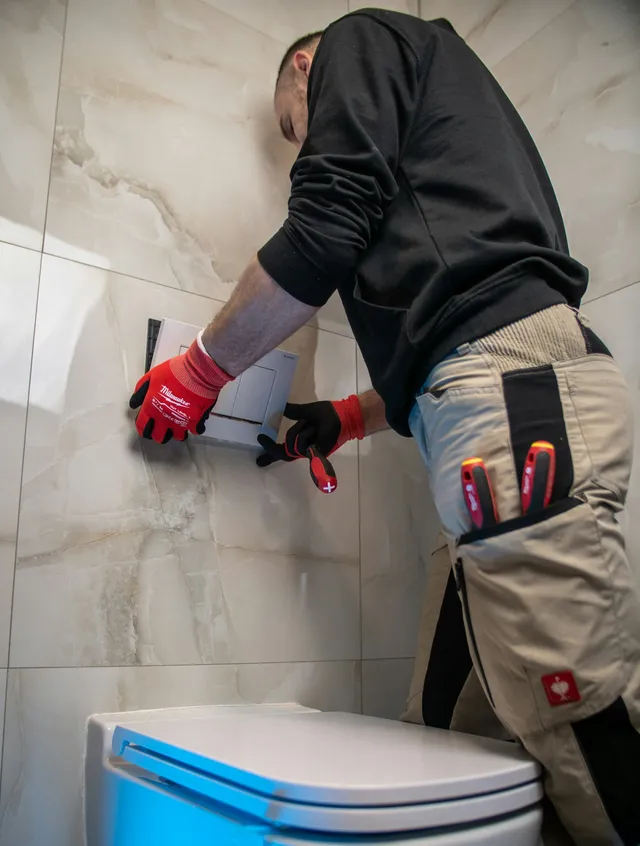
A blocked toilet is one of those jobs most people can sort themselves, and we will happily tell you how, because the ones we get called to are usually the ones where DIY has already gone wrong. Someone has emptied a bottle of chemical unblocker into the pan, bent a coat hanger into the trap, and scratched the porcelain before ringing us. So here is how to unblock a toilet properly, in the order we would do it, and an honest word on when to stop and pick up the phone.
Step one: stop the cistern refilling
Before you touch anything else, make sure the toilet cannot overflow. If the water in the pan is sitting high, one more flush will put it on your bathroom floor.
Lift the cistern lid and look for the float, either a ball on an arm or a plastic cup that rides up a column. Prop it up with a bit of wood or tie it in the raised position, and the cistern will not refill. Alternatively, most modern toilets have an isolation valve on the supply pipe to the cistern: a small brass fitting with a screw slot. Give the slot a quarter turn with a flathead screwdriver so it sits across the pipe, and the water is off.
If the pan is full to the brim, bail some out into a bucket before you start. Working a plunger in an overfull pan just redistributes the problem onto your floor.
Step two: the hot water and washing up liquid trick
This clears more blockages than people expect, and it needs nothing you do not already have.
Squirt a generous amount of washing up liquid into the pan, a quarter of the bottle is fine, and leave it for ten minutes to work its way down into the trap. Then pour in a bucket of hot water from a height of about waist level. Hot from the tap, not boiling from the kettle. Boiling water can crack the porcelain, and a cracked pan turns a ten minute job into a full toilet repair manchester visit.
The soap lubricates, the weight and warmth of the water push, and a soft blockage of paper and waste will often slide through. Give it fifteen minutes. If the level drops, flush once to confirm, and you are done.
Step three: plunge it properly
If hot water does not shift it, you need a plunger, and it needs to be the right one. A flat sink plunger will not seal against the curved outlet of a toilet. What you want is a flange plunger: the type with a rubber sleeve that folds out of the bottom of the cup and fits into the outlet at the base of the pan.
Here is the technique, because technique matters more than force:
- Make sure there is enough water in the pan to cover the plunger cup. Plunging air does nothing. Add water if you need to.
- Fit the flange into the outlet and press down slowly first, to push the air out of the cup without splashing.
- Once you have a seal, work the plunger with firm strokes, down and up, keeping the seal the whole time. The pull is as important as the push. You are moving the blockage back and forth to break it up, not trying to fire it down the pipe.
- After ten to fifteen strokes, break the seal and see if the water drains. Repeat two or three times.
Most blockages that are actually in the toilet give up at this stage.
Step four: the toilet auger
If plunging fails, the next honest step is a toilet auger, sometimes called a closet auger. It is a flexible cable inside a protective sleeve, with a crank handle, and it costs less than an emergency call-out at any DIY shed.
Feed the curved end into the outlet, then crank the handle while pushing gently. The cable works its way round the bends of the trap. When you feel resistance, keep cranking, either the corkscrew tip will grab the blockage so you can pull it back out, or it will break it up enough to flush through. Pull the cable back, run the hot water trick again to clear the debris, and test with a flush.
The protective sleeve matters: it stops the cable scratching the porcelain. Which brings us to the things you should not do.
What not to do
We see the aftermath of all of these regularly, so take this as friendly advice from the people who clean up afterwards:
- Chemical drain unblockers. They rarely work on toilets because the blockage is usually solid matter, not hair and grease. What they do is sit in the pan as a caustic soup, so any plunging afterwards splashes it around, at you or at us. Some can also damage older pipework and the rubber seals in the pan connector.
- Coat hangers and sticks. They scratch the porcelain, which then stains permanently and snags paper forever after, and they can punch through the trap or shove the blockage further down where it is harder to reach.
- Flushing repeatedly to "force it". One test flush after each attempt, that is all. Repeated flushing on a sealed blockage guarantees an overflow.
- Pressure washers and improvised jetting. Genuinely, we have seen it. The trap is not designed for it and neither is your bathroom.
When to give up and call someone
There is no shame in this, some blockages are simply not in the toilet. Call a plumber when:
- You have done two full rounds of plunging plus the auger and the level still will not drop.
- More than one fixture is affected. If the shower gurgles when the toilet drains, or a downstairs gully is backing up, the blockage is in the soil pipe or the drain, not the pan.
- Sewage is coming back up. Stop immediately, that is a health issue and it needs proper equipment.
- The toilet blocks again within days or weeks of being cleared.
For a one-off that will not shift, our blocked toilet manchester service runs day and night, and most are cleared in a single visit. For a toilet that keeps blocking, the fix is further down the pipe: scale in old cast iron soil stacks, roots, or a bellied drain run, all common in Manchester's older terraces. That is a job for our drain unblocking manchester team, who can jet the line and put a camera down it to find out why it keeps happening, rather than just clearing it until next month.
Either way, if you have followed the steps above first, you have lost nothing but half an hour, and more often than not you will not need us at all. If you do, we are on 0161 533 0201.
Frequently asked questions
Will bleach or chemical unblocker clear a blocked toilet?
Almost never, and we would rather you did not try. Chemical unblockers are designed for hair and grease in narrow waste pipes, not for the wide trap of a toilet. They sit in the pan, they do not shift solid blockages, and they turn the job into a hazard for whoever plunges it afterwards, which is often us. Hot water and washing up liquid is safer and works more often.
What is the difference between a toilet plunger and a sink plunger?
A sink plunger is a flat cup that seals against a flat surface. A toilet needs a flange plunger, which has a rubber sleeve that folds out of the cup and fits into the curved outlet at the bottom of the pan. A flat plunger cannot get a seal on a toilet, so you end up splashing water around without moving the blockage.
How do I stop the toilet overflowing while I work on it?
Take the cistern lid off and prop up the float, or turn off the isolation valve on the pipe feeding the cistern with a flathead screwdriver. That stops it refilling, so even if someone flushes out of habit the pan cannot overflow. Do this before anything else if the water is already sitting high.
The water drains slowly but the toilet still sort of works. Should I bother fixing it?
Yes, and sooner rather than later. A slow-draining toilet is a partial blockage, and partial blockages only go one way. Every flush packs a bit more against it. Clearing it while water still gets through is a ten minute job. Clearing it after it seals completely is a much messier one.
My toilet keeps blocking every few weeks. What is going on?
A toilet that blocks repeatedly is telling you the problem is not in the pan. Common causes are scale build-up in old cast iron soil pipes, a partial obstruction further down the drain, tree roots, or a poorly laid pipe holding waste. That needs the drain looked at properly rather than another round with the plunger.
Services that can help
Need a plumber in Manchester today?
Call us for a fast, honest quote. We cover Greater Manchester 24 hours a day, and we answer the phone.